


Common Problems and Solutions When Using Solid Calcium-Zinc Heat Stabilizers in PVC Wire & Cable Compounds
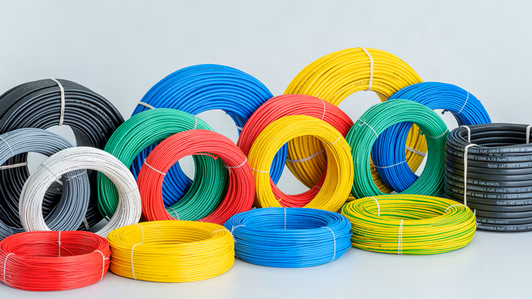
As environmental regulations continue to tighten worldwide, solid calcium-zinc (Ca/Zn) heat stabilizers have become a preferred choice for PVC wire and cable compounds due to their excellent environmental performance, low toxicity, and stable processing behavior.
However, during production, manufacturers may encounter various processing and quality issues. In most cases, these problems are not caused by the stabilizer alone, but by the interaction between the stabilizer system, lubricants, plasticizers, fillers, processing conditions, and PVC resin quality.
This article summarizes the most common problems encountered in PVC wire and cable compounds and provides practical solutions.
Rough Surface or Pitting
A rough surface, pinholes, or pitting defects are often caused by excessive moisture in the compound, poor plasticization, insufficient lubrication, oversized filler particles, or excessive volatile components in the formulation.
To solve this issue, mixing temperature and mixing time should be properly increased. Plasticization should be improved by optimizing processing conditions. Finer fillers should be used, and low-melting-point lubricants should be reduced when necessary.
Lumps or Gel Particles on the Surface
Surface lumps or gel particles are mainly caused by excessive fish-eyes in PVC resin, incomplete absorption of plasticizers, or contamination from large particles.
Using higher-quality PVC resin, optimizing the mixing process, and removing coarse particles from raw materials can effectively eliminate this problem.
Discoloration During Processing
Color change during extrusion is usually caused by insufficient thermal stability or improper lubrication balance.
Increasing the dosage of calcium-zinc stabilizer, selecting a more efficient stabilizer system, and optimizing internal and external lubrication can help maintain stable color during processing.
Discoloration After Storage
Some compounds appear normal after production but gradually discolor during storage. This is typically related to poor long-term thermal stability, incompatibility between stabilizer and calcium carbonate, or unstable pigments.
Improving formulation design, selecting a more suitable stabilizer system, and using high-quality pigments can significantly improve color retention.
Powder Blooming on the Surface
White powder on the surface is usually caused by excessive lubricant dosage or migration of incompatible components from the stabilizer system.
Reducing lubricant dosage and selecting a stabilizer with better compatibility can effectively reduce blooming issues.
Oil Bleeding
Oil exudation is usually caused by poor compatibility between plasticizer and PVC resin or migration of other liquid additives in the formulation.
It is necessary to evaluate plasticizer selection and check all liquid additives in the system. Problematic materials should be replaced or reduced.
Voids or Air Pockets in the Cross Section
Voids in the insulation layer are mainly caused by moisture, poor plasticization, or insufficient thermal stability.
Improving drying conditions, optimizing processing parameters, and strengthening thermal stability performance can effectively reduce internal voids.
Thickness Fluctuation
Unstable insulation thickness is usually caused by poor plasticization uniformity or partial degradation during processing.
Maintaining a stable formulation, improving plasticization uniformity, and cleaning degraded residues in equipment are important solutions.
Poor Electrical Insulation Performance
Poor insulation performance is often caused by conductive impurities, stabilizers with poor electrical properties, or insufficient insulating fillers such as calcined kaolin.
Strict control of raw material purity and selection of stabilizers designed for wire and cable applications can significantly improve electrical performance.
Stress Whitening or Brittleness
Stress whitening and brittleness are usually caused by poor plasticization or excessive filler loading.
Improving lubrication balance and reducing filler content when necessary can improve flexibility and impact resistance.
Poor Adhesion to the Conductor
Poor adhesion between PVC insulation and conductor is mainly caused by excessive external lubricant in the formulation
Reducing external lubricant dosage can significantly improve bonding performance.
Conclusion
The performance of PVC wire and cable compounds depends on a delicate balance between the stabilizer system, lubricants, plasticizers, fillers, processing conditions, and resin quality.
A well-designed calcium-zinc stabilizer system should provide excellent initial color and long-term thermal stability, good electrical insulation performance, low plate-out and blooming tendency, stable processing performance, and compliance with environmental requirements.
By optimizing both formulation and processing conditions, manufacturers can significantly improve product quality, reduce defects, and achieve more stable wire and cable production.